



Companies say they’re growing, but HR budgets keep shrinking. What gives?
Pay increases are averaging 3.5%. Sounds reasonable. Except 44% of companies are considering spreading increases evenly across their workforce. The trend of “peanut butter pay increases” is back. We haven’t seen this since the Great Recession, which should give us pause.
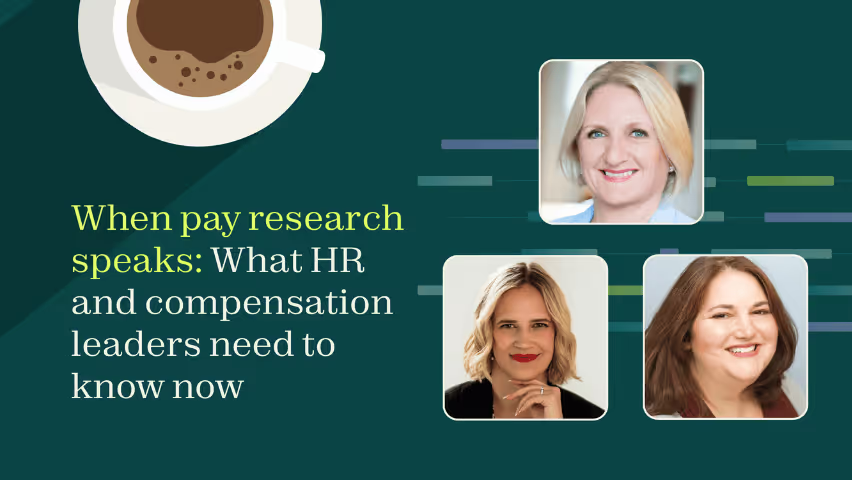
Stacey Harris from Sapient Insights Group sat down with Payscale’s Amy Stewart and Chief Compensation Strategist Ruth Thomas on our recent episode of Comp and Coffee to explain why organizations are stuck “planning” for growth, while simultaneously cutting costs. They also discuss how AI is changing compensation, and what HR leaders need to do differently now that the old playbook isn’t working.
Want the full conversation?
Listen to this Comp & Coffee episode now ⬇️
Episode Highlights
What's happening in HR and compensation?
RUTH THOMAS: We've got data coming from every direction. Today, we're talking about translating insight into action, showing how HR leaders can make confident, defensible compensation decisions.
STACEY HARRIS: We're seeing what I call an 'economic re-enlightenment.' Organizations are simultaneously planning for growth while cutting costs. HR and compensation leaders are balancing hiring, attrition, and pay adjustments, all under intense scrutiny.
AMY STEWART: Compensation remains one of the largest costs for organizations. Pay increases are averaging a 3.5% median, but 44% of companies are using 'peanut butter' pay increases, spreading raises evenly to manage budgets, similar to patterns seen in the Great Recession.
AI, technology, and trust in decision-making
STACEY HARRIS: User experience and vendor relationships matter more than ever. AI adoption is growing, but trust in data is critical. Only about 24% of organizations are using AI regularly in HR processes. Validated data sets within trusted platforms outperform free tools.
AMY STEWART: AI isn’t just generative; it’s machine learning, prediction engines, and analytics. It helps with market pricing, hybrid roles, and scarce skills, but humans must interpret outputs to maintain confidence in compensation decisions.
Connecting insights to business strategy
RUTH THOMAS: Compensation isn't just an HR function. It’s a strategic lever connected to growth, efficiency, and talent retention. HR and comp leaders need to bring validated data to the C-suite to make defensible decisions.
STACEY HARRIS: Focus on data advocacy. Use fact-based, validated datasets to guide decisions and AI usage. Boards and executives will make their own assumptions if you don’t provide context.
AMY STEWART: Change is constant and accelerating. Compensation must become more strategic, automated, and integrated. The old “back office” way of using outdated data is over.
Key takeaways
- Growth vs. cost-cutting is the primary tension for HR in 2026
- Pay transparency, merit-based increases, and employee engagement remain top priorities
- AI can improve efficiency, but trust in validated data sets is essential
- Compensation decisions must be strategic, connected to business outcomes, and backed by reliable data